
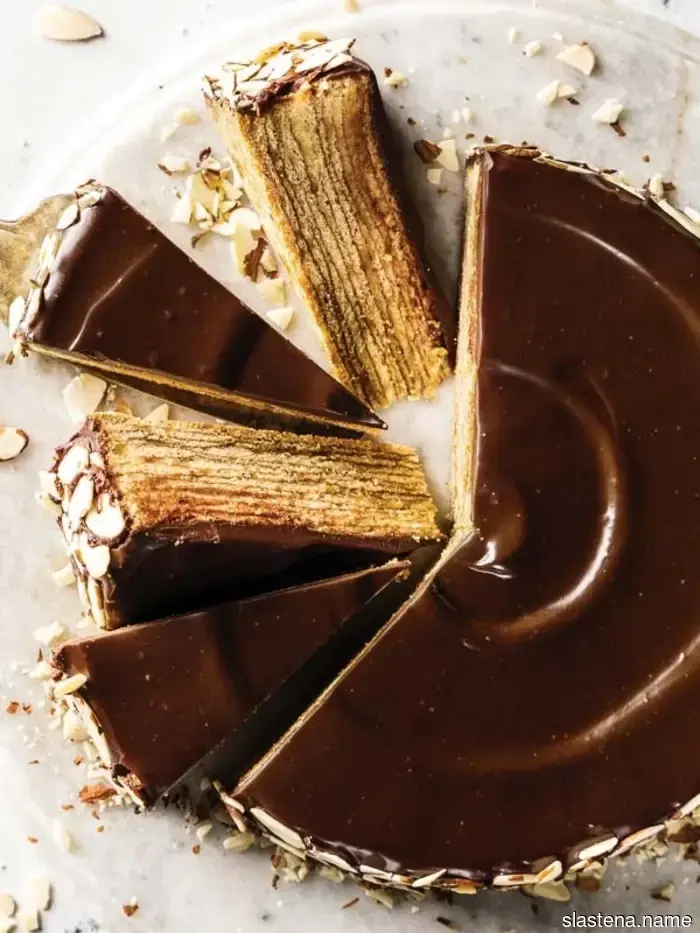
Origin of a Classic: Baumkuchen - Bake from Scratch
With its unique ringed and ridged look and a rich history spanning centuries, Baumkuchen has become a favorite dessert around the globe. The term “baumkuchen” is German for “tree cake,” which describes a cylindrical cake baked in layers on a spit—a large pole or stick that is slowly rotated over a fire—and, when cut, it reveals layers that resemble the rings of a tree. Similar cakes to baumkuchen started to emerge in the Holy Roman Empire (which includes parts of present-day France, Germany, Italy, and other Western and Central European nations) during the Middle Ages. Historians estimate that baumkuchen is at least 600 years old, with the earliest German-language recipe surfacing in print around 1450. Initially, baumkuchen was made by thinly coating the spit with dough. After the first layer was cooked and browned on the outside, another layer of dough was added and cooked. This layering and cooking process continued until the cake reached the desired size, usually ranging from 18 to 20 layers. Once taken off the spit, the hollow cake was sliced crosswise, exposing its tree ring-like layers. Due to its lengthy and intricate preparation, baumkuchen was primarily made for holidays and special events among the affluent; it was a favored cake at noble weddings in Nuremberg and Frankfurt, Germany. Individual portions were occasionally flavored with spices like nutmeg or spirits such as rum, but as various ingredients became more available, the dough itself began to incorporate different flavors.
By the 1500s, the cake-making method shifted. Instead of applying numerous thin layers of dough to the spit, a thicker dough was tied to the spit at intervals with string, forming ridges on the cake's exterior as it baked. Additionally, as chocolate became popular among royalty and the elite in the 1600s, baumkuchen started to be coated in chocolate before being removed from the spit. The method evolved further into the version most familiar today: instead of using dough, layer upon layer of a thin batter is poured onto a continuously rotating cooking cylinder, and some bakeries use a wooden or metal comb to lightly score the layers, reproducing the exterior ridges created by strings. Baumkuchen is still often glazed with chocolate, though many bakers add their personal touches with nuts and other embellishments.
Despite the increasing popularity and affordability of baumkuchen, it remained largely a homemade dessert for parties for much of its history. Around the early 1800s, bakeries in Dresden, Cottbus, and Salzwedel, Germany, established mail-order services for baumkuchen; among these, the bakeries in Salzwedel gained the most fame for their cakes and are still operating today. The love for baumkuchen has spread globally, with variations appearing in Japan and Hawaii. A baker named Karl Juchheim, who was living in China, became a prisoner of war in Hiroshima, Japan, during World War I. After his release, he moved to Japan and opened a bakery in Kobe, where he began selling baumkuchen. The cake quickly became popular with the locals and eventually throughout Japan. In 1880, “Merrie Monarch” King Kalākaua of Hawaii visited Berlin, Germany, where he discovered baumkuchen. He enjoyed the cake and brought the recipe back to Hawaii. Although it didn't become ubiquitous across all the islands, today, the Baumkuchen Farm in Papaikou, Hawaii, sells cakes with a tropical twist, featuring flavors like macadamia nuts, pineapple, mango, and Hawaiian coffee. They also offer full-sized baumkuchen, referred to as “stems,” for weddings.
Fortunately for all, you don’t need a spit to create baumkuchen. Our recipe is designed for home bakers to replicate the same flavors and distinctive layers of the original, making it equally suitable for special occasions.
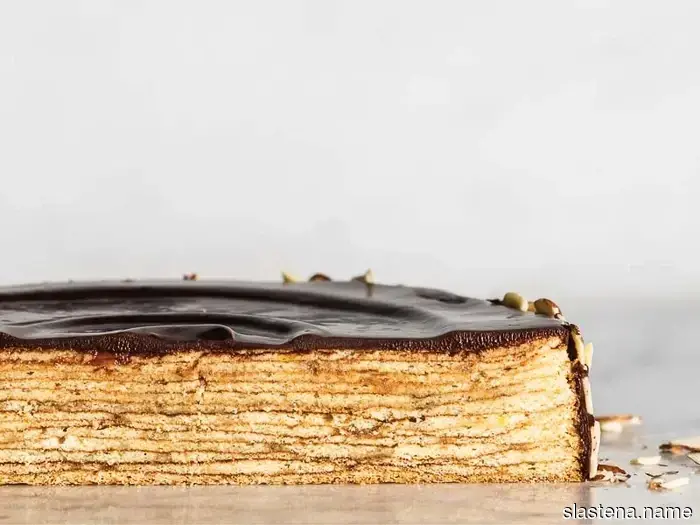
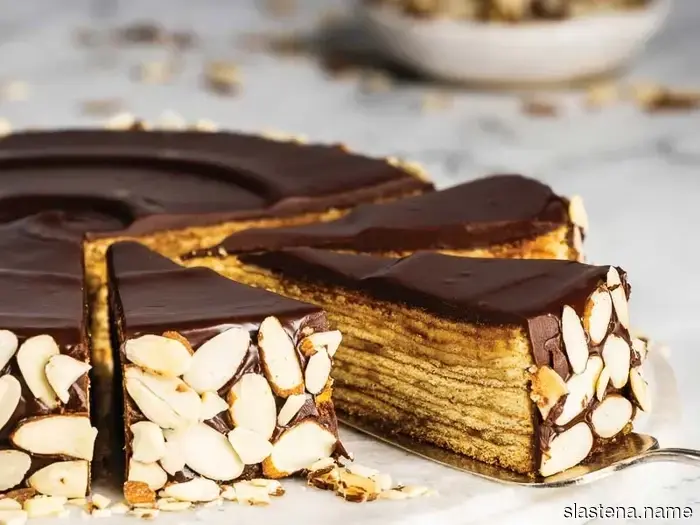
Makes 1 (9-inch) cake. This home-friendly iteration is crafted by spreading thin layers of a spiced and spirit-infused batter into a pan and baking them individually until lightly toasted. A generous application of preserves adds moisture and a subtle fruity note. Finished with a rich ganache and crunchy almonds, this decadent cake offers a delightful blend of flavors and textures.
**Cake Ingredients:**
- 6 large eggs (300 grams), separated, at room temperature
- 1¼ cups (250 grams) granulated sugar, divided
- ¼ teaspoon kosher salt
- 5 ounces (142 grams) marzipan (see Note), chopped
- 1 cup (227 grams) unsalted butter, softened
- 3 tablespoons (45 grams) rum or almond liqueur
- 1 teaspoon (4 grams) vanilla extract
- ½ teaspoon (2 grams) almond extract (optional)
- 1¼ cups (156 grams) cornstarch
Origin of a Classic: Baumkuchen - Bake from Scratch
Layer by layer, this cake infused with spices and spirits bakes to perfection. Coated with preserves and adorned with ganache and almonds, it is rich, toasty, and absolutely irresistible!