

Lemon-Poppy Seed Rugelach - A Recipe from Bake from Scratch
Ground poppy seeds are cooked into a thick paste with milk, sugar, and lemon zest, a method adapted from Central European baking traditions. The milk helps to counter the natural bitterness of the poppy seeds, while the citrus adds brightness to the filling. This dough replaces cream cheese with shortening, resulting in a softer, more yielding texture that is less tangy yet wonderfully tender, keeping the dough pareve. Ensuring the filling is rolled evenly is crucial; too much filling causes it to burst, while too little makes it vanish. A lemon sugar topping adds a delightful crunch after baking.
Yields 24 rugelach.
**Filling:**
- ½ cup (70 grams) poppy seeds
- ⅓ cup (67 grams) granulated sugar
- ⅓ cup (80 grams) nondairy milk (see Note)
- 2 teaspoons (2 grams) lemon zest
- 1½ teaspoons (8 grams) fresh lemon juice
- ¼ teaspoon kosher salt
**Dough:**
- ½ cup (100 grams) granulated sugar
- ½ cup (96 grams) all-vegetable shortening
- 1 large egg (50 grams), at room temperature
- 1½ cups (188 grams) all-purpose flour
- ¼ teaspoon (1 gram) baking powder
- ¼ teaspoon kosher salt
**Topping:**
- ¼ cup (50 grams) granulated sugar
- 2 teaspoons (2 grams) lemon zest
- 1 large egg (50 grams), at room temperature
- 1 tablespoon (15 grams) water
**For the filling:** In a spice grinder, grind the poppy seeds until finely ground. In a small saucepan, combine the ground poppy seeds with all remaining filling ingredients, bringing to a boil over medium-high heat while stirring occasionally until the sugar dissolves. Lower the heat to medium-low and stir constantly until the mixture thickens, which should take 3 to 5 minutes. Remove from heat and let cool completely before using. Store in an airtight container in the refrigerator for up to 5 days.
**For the dough:** In the bowl of a stand mixer fitted with the paddle attachment, beat the sugar and shortening at medium speed until smooth and creamy, about 2 to 3 minutes, pausing to scrape the sides and bottom of the bowl. Add the egg and mix until combined, stopping again to scrape the bowl. In a medium bowl, whisk together the flour, baking powder, and salt. With the mixer on low speed, gradually add the flour mixture to the sugar mixture, mixing until just combined and a dough forms. Turn the dough out onto a clean surface and shape it into a disk. Wrap in plastic wrap and refrigerate for at least 30 minutes or up to 3 days.
Preheat the oven to 350°F (180°C). Line rimmed baking sheets with parchment paper.
Divide the dough into two equal portions (about 214 grams each). Roll one portion of dough on a lightly floured piece of parchment paper, keeping the other portion refrigerated until needed. Lightly dust the dough with flour and cover with another piece of parchment paper. Roll into a rectangle measuring 13x6 inches, with one long side facing you. Remove the top parchment layer.
Spread half of the filling (around ¼ cup or 100 grams) onto the dough, leaving a ½-inch border on one long side. From the long side opposite the border, fold in 1½ inches of dough. Continue folding the dough in 1½ inch increments, using the parchment for assistance, until it forms a log. Trim off ½ inch from each end of the log. Using a sharp knife, cut the log into 1-inch thick slices. Place the slices 1½ inches apart on the prepared pans. Repeat the process with the remaining dough and filling.
**For the topping:** In a small bowl, whisk together the sugar and lemon zest. In another small bowl, whisk the egg with 1 tablespoon of water. Brush the egg mixture over the rugelach and sprinkle with the lemon sugar.
Bake until the edges are lightly browned, about 20 minutes, rotating the pans halfway through baking. Allow to cool on the pans for 10 minutes, then transfer to wire racks to cool completely. Store in an airtight container for up to 5 days.
**Note:** Using nondairy milk keeps this recipe pareve, but feel free to use any milk of your choice.
**PRO TIP:** The dough is quite delicate, so handle it quickly. It's essential to keep it cold; if it becomes too soft after shaping, it may be difficult to spread the poppy seed filling without tearing it. In such cases, return the rolled-out dough to the refrigerator for a few minutes to firm up.
We'd love to hear how it turned out!
Other articles
 Apricot-Almond Rugelach - From Scratch Baking
 Rugelach Reinvented: Five Tasty New Versions - Bake from Scratch
Rugelach have their origins in centuries of Ashkenazi Jewish baking. The term is derived from the Yiddish word “rugel,” which translates to “little twist,” referencing their rolled form.
Rugelach Reinvented: Five Tasty New Versions - Bake from Scratch
Rugelach have their origins in centuries of Ashkenazi Jewish baking. The term is derived from the Yiddish word “rugel,” which translates to “little twist,” referencing their rolled form.
 Sprinkles Rugelach - A Recipe from Bake from Scratch
Fun on the outside, yet exact at its core. The filling consists solely of cream cheese sweetened with sugar, which transforms into a soft, tangy layer within the dough when baked.
Sprinkles Rugelach - A Recipe from Bake from Scratch
Fun on the outside, yet exact at its core. The filling consists solely of cream cheese sweetened with sugar, which transforms into a soft, tangy layer within the dough when baked.
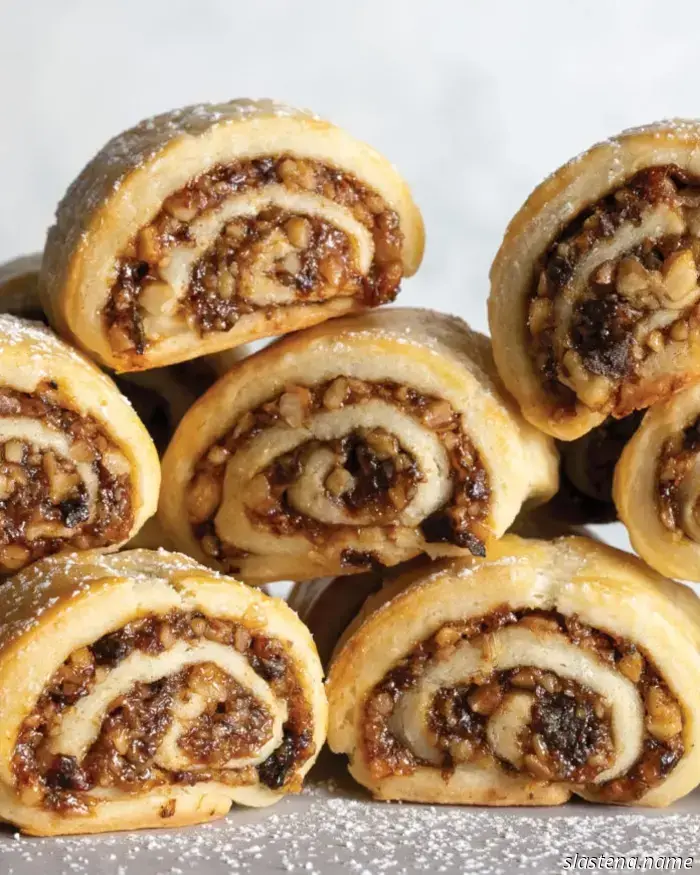 Traditional Rugelach - Bake from Scratch
The brilliance of rugelach is in the dough, which consists of equal amounts of butter and cream cheese, mixed just until blended.
Traditional Rugelach - Bake from Scratch
The brilliance of rugelach is in the dough, which consists of equal amounts of butter and cream cheese, mixed just until blended.
 Yeasted Chocolate Rugelach - Bake from Scratch
This rugelach dough made with yeast results in a light pastry similar to brioche.
Yeasted Chocolate Rugelach - Bake from Scratch
This rugelach dough made with yeast results in a light pastry similar to brioche.
Lemon-Poppy Seed Rugelach - A Recipe from Bake from Scratch
Ground poppy seeds are cooked into a dense paste using milk, sugar, and lemon zest—a method taken from Central European baking.