
From the Pantry: Chocolate - Recipes for Baking
Chocolate requires little explanation. The very mention evokes thoughts of melted, smooth textures, intricate and bittersweet flavors, along with rich scents. Let's explore how this ingredient transitions from bean to bar. The process starts on cacao-harvesting plantations, primarily located in Ivory Coast and Ghana. Once the cacao beans and pulp are extracted from the pods, they undergo fermentation for two to eight days before being thoroughly dried. Subsequently, the beans are transported to chocolate and cocoa production facilities, where they are roasted, broken into nibs, and ground to produce chocolate liquor. This chocolate liquor is a thick liquid that results from finely crushed cacao nibs releasing their valuable cocoa butter, mixed with cocoa granules. At this stage, the chocolate liquor has two potential paths: it can be pressed into a cocoa cake, which removes all cocoa butter to create cocoa powder, or it can undergo further refinement to become chocolate.
To produce chocolate, chocolate liquor is combined with milk solids and sugar, and the mixture is subjected to a process called conching—an essential refining stage involving a conche machine that rubs and grinds the mixture until it becomes smooth and uniform. The ingredients added during conching determine the type of chocolate produced. For example, milk chocolate includes lactose, butterfat, and milk proteins. At the conclusion of conching, which may take up to 36 hours, the resulting chocolate simply needs to cool and solidify.
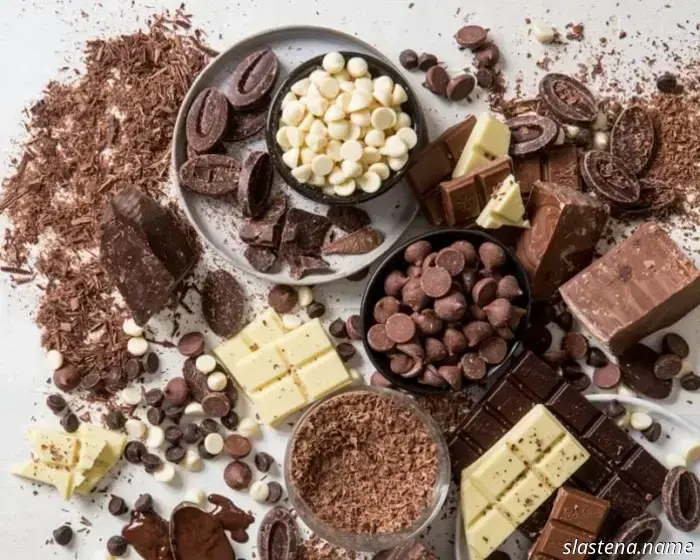
Unsweetened chocolate is typically available in blocks and is sometimes referred to as "baker's chocolate," characterized by its crumbly, extremely bitter nature, intended to be melted down and incorporated into batters or made into a ganache that you can sweeten to taste. Generally, semisweet chocolate contains around 60% cacao, bittersweet is in the low 70% range, and dark chocolate exceeds 70%. Milk chocolate, on the other hand, features a lower cacao percentage while gaining creaminess from lactose and milk solids during conching, resulting in a smoother and sweeter flavor. For recipes calling for milk chocolate specifically, it is advisable to follow the instructions closely.
Then there's the somewhat controversial topic of white chocolate. For many years, it has been deemed a misnomer for containing only cocoa butter, which technically categorizes it as a confection rather than true chocolate. Nevertheless, the term is regulated, similar to regular chocolate: to be classified as white chocolate, it must have at least 20% cocoa butter and 14% milk solids.
Beyond the different types of chocolate, it is essential to understand how chocolate behaves in baking compared to cocoa powder. In cake batter, incorporating melted chocolate differs greatly from using cocoa powder. Cakes made with melted chocolate will be more sensitive to temperature, as the cocoa solids can harden in the refrigerator, leading to a drier cake texture. Cocoa powder brownies will yield a chewy texture, while brownies made with melted chocolate will be dense and fudgy. This difference stems from the cocoa butter in chocolate, which functions similarly to regular butter in baking, contributing to a smoother and creamier texture. In contrast, cocoa powder can make baked goods dry, as it absorbs moisture without containing any cocoa butter.
Currently, many bakers prefer using wafers or fèves. Larger than chocolate chips and containing fewer chemical stabilizers, fèves (meaning “little trinkets” in French) are oval-shaped chocolate pieces favored by chefs like Jacques Torres for their ideal chocolate chip cookies. Valrhona is a well-known producer of fèves, offering a wide range from blond to dark chocolate. Similarly, chocolate wafers are slightly larger than chips and have a flatter disk shape due to added cocoa butter.
Chocolate can significantly affect your frosting—quite literally. Properly melting your chocolate is crucial before transforming it into whipped chocolate buttercream or smooth ganache. Melted chocolate can seize up when exposed to water or overheated quickly. When melting on the stovetop, using a double boiler method—where chocolate is melted over simmering water and not in direct heat—is recommended. Additionally, chop or break the chocolate into smaller pieces before melting for even heat distribution. When combining melted chocolate with another ingredient, ensure that the ingredient is at room temperature; cold ingredients can cause the chocolate to clump.
Baking with chocolate can be tricky, exasperating, and, for lack of a better term, temperamental. Yet, after enjoying just one bite of a freshly baked chocolate chip cookie, you’ll realize the effort is worth it.

From the Pantry: Chocolate - Recipes for Baking
Chocolate, whether dark, milk, or semisweet, is an invaluable ingredient for bakers aiming to achieve immediate indulgence.