
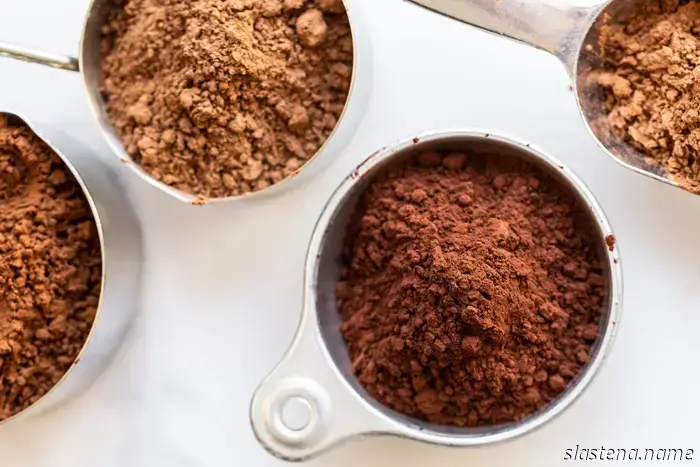
Natural Cocoa vs. Dutch-Process Cocoa Powder
This post may include affiliate links. Please refer to our disclosure policy for more information.
If you're a chocoholic and enthusiastic baker like I am, you're likely to use cocoa powder quite frequently. You may have noticed that the labels on cocoa powders can be quite perplexing — such as "natural," "Dutch process," and "alkalized."
During my initial baking experiences, I often replaced cocoa powders without much consideration. This sometimes resulted in flat cakes, dry brownies, or an odd metallic flavor. I figured out the hard way that the chemistry behind cocoa powder significantly impacts the flavor, texture, and structure of baked goods.
Let’s explore this further.
**A Hint of Science**
What is Cocoa Powder?
Cocoa powder is produced by fermenting, drying, roasting, and grinding cocoa beans, then separating most of the fat to create a fine powder. It offers a stronger chocolate flavor than solid chocolate in various baking recipes.
**Quick Comparison:**
| Feature | Natural Cocoa | Dutch Process Cocoa |
|--------------------|-------------------------|---------------------------|
| pH | Acidic (~5.5) | Neutral (~7-8) |
| Color | Light brown | Deep, rich brown |
| Flavor | Fruity, sharp | Smooth, mellow |
| Best with | Baking soda | Baking powder |
| Fat content | Lower (~10%) | Higher (~20-26%) |
What is Natural Cocoa Powder?
Natural cocoa powder is unsweetened, medium brown in color, and has a bitter, sharp, and fruity flavor. It's commonly used in American brownie and cake recipes.
**Quick Facts about Natural Cocoa Powder:**
- Acidic (pH ~5.5)
- Activates baking soda
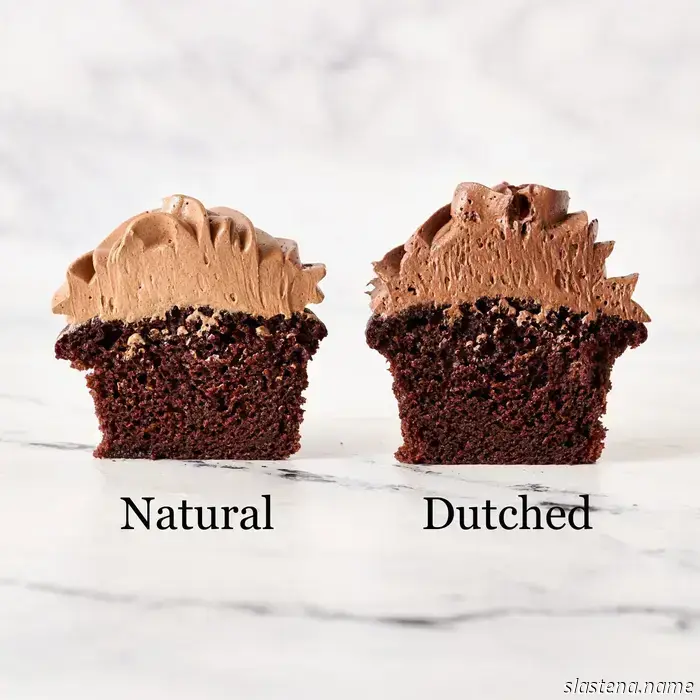
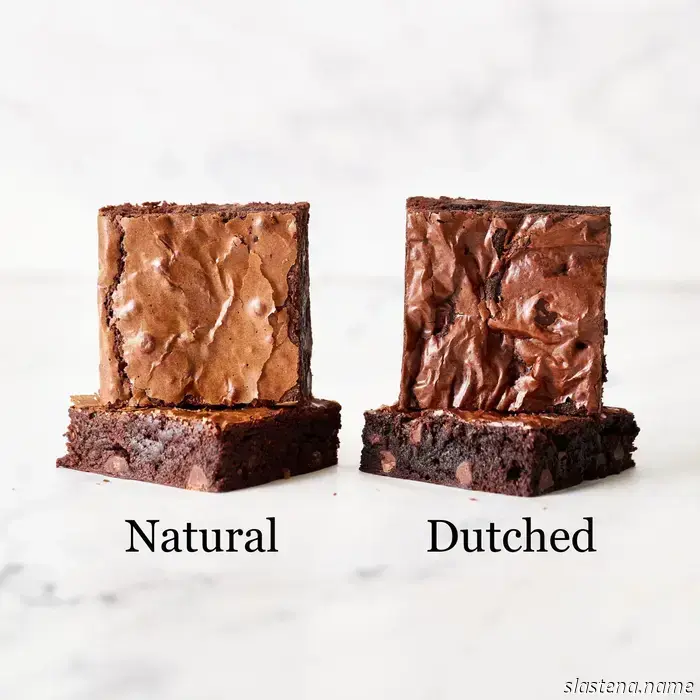
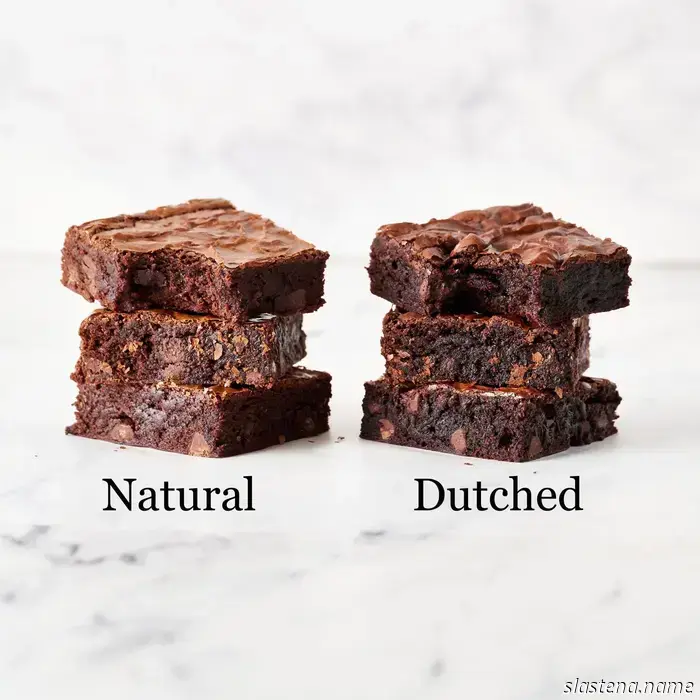
- Results in lighter-colored baked goods that rise higher but can sometimes be drier
**How Natural Cocoa Powder Functions in Baking**
Its acidity assists in setting the proteins in baked goods more quickly, leading to taller cookies and cakes.
**What leavener works with natural cocoa powder?**
Baking soda. The acidity of natural cocoa powder activates the baking soda, enabling the proper rise in the oven, and helps neutralize the cocoa powder's acidity for a better taste.
**Is unsweetened cocoa powder the same as natural cocoa powder?**
Yes. The term "natural" may not be present on the label, but it is the most common type found in grocery stores across the U.S.
**Cocoa Fat Content = IMPORTANT!**
Natural cocoa powder typically has less cocoa butter and more starch, making it drier in baked goods. Most varieties found in stores contain around 10% fat, which can result in dry or crumbly baked items that lose moisture quickly.
For the best outcomes: Opt for a cocoa powder with at least 20% fat.
**How can you determine the fat content in cocoa powder?**
Check the nutrition label: you should aim for at least 1 gram of fat per 5-gram serving, which is approximately 20% cocoa fat.
What is Dutch-Processed Cocoa Powder?
Dutch-process cocoa powder undergoes treatment with an alkaline substance, like potassium carbonate or sodium carbonate, to elevate the pH to a neutral 7 or alkaline 8.
**Quick Facts about Dutch-Process Cocoa Powder:**
- Neutral to alkaline with a pH of 7 to 8
- Typically paired with baking powder
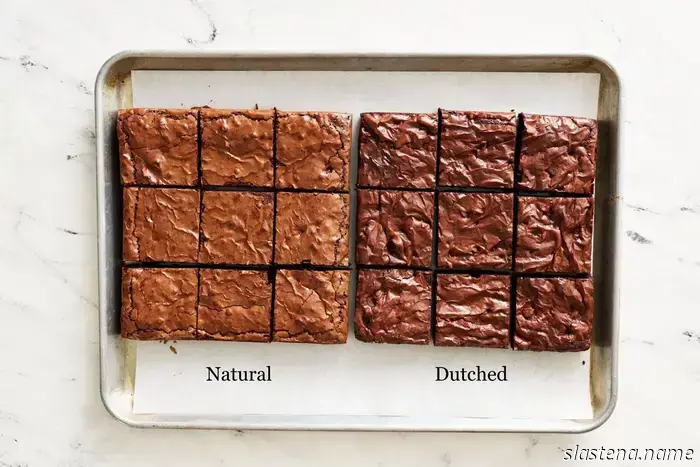
- Produces deep-colored, denser, and fudgier baked goods
**How Dutch Cocoa Powder Influences Flavor and Texture**
This method results in a smoother, fuller, softer flavor and a darker color. It also leads to denser, fudgier, and moister baked goods that do not rise as high. This is attributed to its lower acidity and often higher cocoa butter concentration compared to most natural cocoa powder products.
**How can I identify Dutch-processed cocoa powder?**
Look for terms like “Dutched,” “cocoa processed with alkali,” “alkalized,” or “European-style” on the packaging.
**What leavener works with Dutch-processed cocoa powder?**
Baking powder, as Dutch-process cocoa lacks acidity. Baking powder activates with liquid and heat rather than acidity. Learn more about the differences between Baking Powder and Baking Soda here.
**Note:** Dutch-process cocoa powder will not activate baking soda. To achieve a leavening effect, your batter or dough will need an additional acidic ingredient, such as brown sugar, lemon, buttermilk, sour cream, or yogurt.
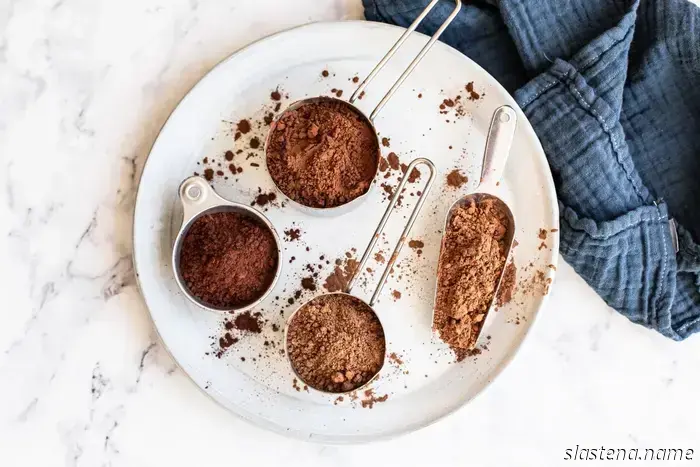
**Color does NOT equate to flavor or quality!**
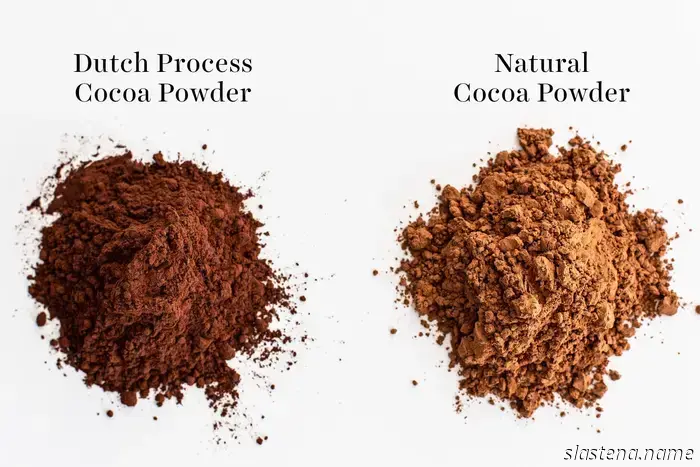
One of the first things you'll notice about Dutch cocoa is its rich, deep, and sometimes reddish hue, a result of the Dutching process. In contrast

Other articles
Natural Cocoa vs. Dutch-Process Cocoa Powder
Discover the main distinctions between natural and Dutch process cocoa powder, including how each influences flavor, color, and texture, as well as which option to select!