

Kouign Amann - Prepare from the Beginning
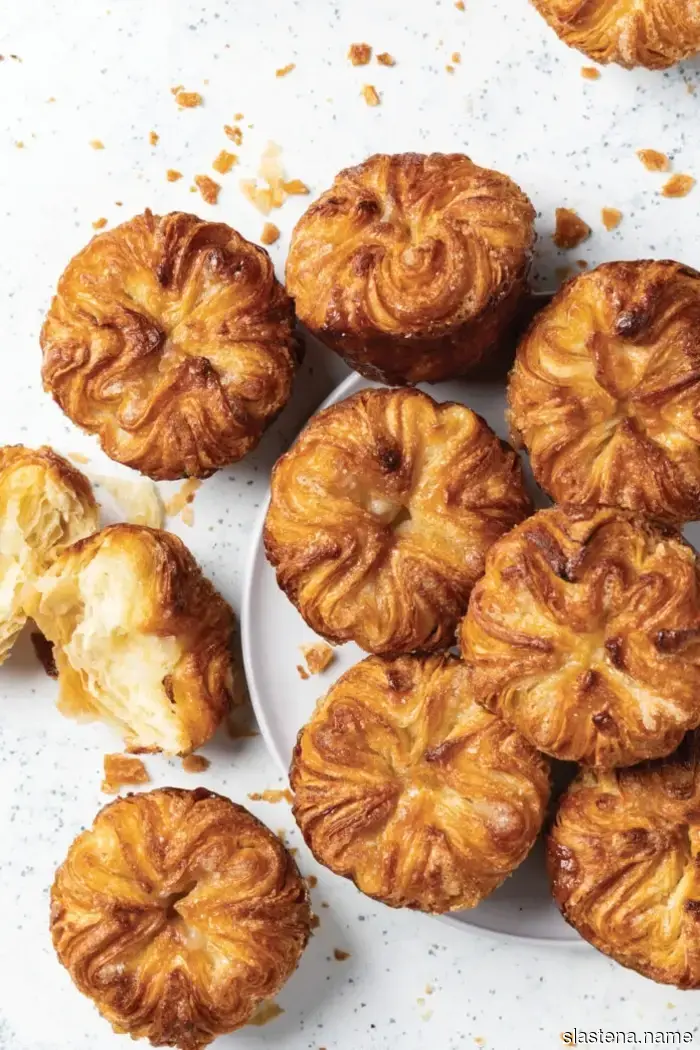
Translating directly to "butter cake" and pronounced "kween ah-mahn," these small, layered pastries are truly regal. With a caramelized sugar crust and laminated dough, they boast a crisp, flaky outside while the interior remains soft and delicate. Kouign amann is often likened to a blend of a croissant and a sticky bun, and the original recipe, which dates back to the 1860s, transitioned from a large cake to smaller, individual servings using a muffin pan for convenience.
Pro-Tip: Although these pastries are best enjoyed on the same day they are prepared, they can be revived the following day. Reheat on a parchment-lined baking sheet at 350°F (180°C) until warmed through, about 5 to 10 minutes. Allow to cool completely, and the pastries will be crisp and delightful to eat.
Yields 12 pastries.
**Dough:**
- 1¼ cups (300 grams) cold water (65°F/18°C to 70°F/21°C)
- 1 tablespoon (9 grams) instant yeast
- 1½ teaspoons (6 grams) granulated sugar
- 4 cups (508 grams) bread flour
- 1 tablespoon (14 grams) salted butter*, at room temperature
- 1 tablespoon (9 grams) kosher salt
**Butter block:**
- 1½ cups (340 grams) salted butter*, at room temperature
- 2 cups (400 grams) granulated sugar, plus extra for dusting
**For the dough:** In the bowl of a stand mixer, whisk together 1¼ cups (300 grams) cold water, yeast, and sugar until both the yeast and sugar dissolve. Then, incorporate the flour, butter, and salt; using the paddle attachment, mix on low speed until a shaggy dough forms. Switch to the dough hook and mix at low speed until the dough is smooth and forms a ball around the hook. Increase the mixer speed to medium-low and knead until the dough is smooth and elastic, about 4 to 6 minutes. Cover with plastic wrap and let it rest at room temperature (67°F/20°C to 72°F/22°C) until it has significantly puffed up, around 45 minutes to 1 hour. Using a permanent marker or pencil, draw an 8-inch square on a large piece of parchment paper, then flip it over.
**For the butter block:** In a medium bowl, stir and fold the butter until smooth. Spread the butter evenly within the drawn square. Fold the parchment over the butter to cover it and refrigerate until firm but still pliable, about 30 minutes, or up to 2 days.
Punch down the dough and transfer it to a clean surface, flattening it into an 8-inch square and wrapping it in plastic wrap. Freeze this for 20 minutes. Retrieve the butter block from the refrigerator; it should be cold yet pliable. If it is too soft, return it to the refrigerator to chill longer; if it’s too hard, let it sit at room temperature for a few minutes.
On a lightly floured surface, roll the dough into a 16x8-inch rectangle, ensuring one long side is closest to you. Unwrap the chilled butter block and place it in the center of the dough, then fold the dough over the butter block, fully enclosing it and sealing the seam (the seam should run vertically). Rotate the dough 90 degrees to make the seam horizontal, then roll the dough into a rectangle that is ¼ inch thick (approximately 22x10 inches), taking care to maintain the rectangular shape, using a bench scraper as needed. Fold the dough in thirds like a letter, brushing off excess flour between layers with a pastry brush. Rotate the dough 90 degrees and repeat the rolling and folding process.
Wrap the dough in plastic wrap and refrigerate for 30 to 45 minutes (this allows the dough to relax and the butter to chill; at this point, it can be refrigerated overnight).
Lightly spray 2 (6-cup) jumbo muffin pans with flour baking spray and dust just enough granulated sugar to coat the bottom and sides of each cup. On a clean work surface, sprinkle 1⅔ cups (333 grams) of sugar in an even layer. Turn the dough out onto the sugar, ensuring the seam is facing you, and roll the dough into a 22x10-inch rectangle. Evenly sprinkle the remaining ⅓ cup (67 grams) of granulated sugar onto the dough, then fold the dough like a letter again.
Next, rotate the dough 90 degrees and roll it into a 17x13-inch rectangle, dusting both the dough and surface with sugar as needed. (Work quickly to avoid tearing or overworking the dough, as the sugar will liquify if left too long on the dough.) Trim the dough to
Other articles
Kouign Amann - Prepare from the Beginning
Kouign amann is frequently characterized as a blend of a croissant and a sticky bun, showcasing a caramelized sugar crust and a tender pastry center.